Why the U.S. Is Deepening Mineral Ties with Kenya While Still Relying on DRC’s Critical Resources
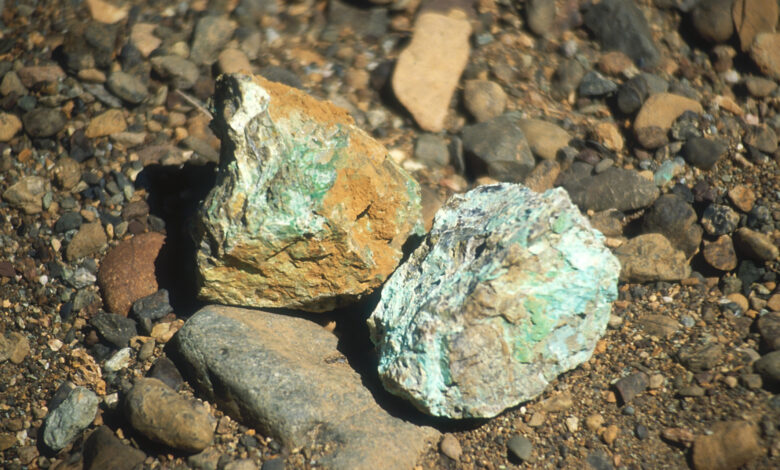
While the Democratic Republic of Congo (DRC) remains one of the world’s most resource-rich countries, particularly in copper, cobalt, and coltan, the United States is simultaneously strengthening its engagement with Kenya in the race for critical minerals.
The shift reflects a broader geopolitical strategy in which access to raw resources is no longer the sole driver of international partnerships.
On the sidelines of the G7 summit, Kenyan President William Ruto confirmed ongoing advanced negotiations with the United States over a strategic minerals agreement.
The discussions focus on rare earth elements and other materials essential for battery production, advanced technologies, and defense industries.
A key condition set by Nairobi is local processing of extracted resources. “The minerals will be processed in Kenya,” President Ruto stated, signaling a clear shift away from the traditional export of raw materials.
This development comes as the DRC continues to hold some of the world’s most significant mining reserves, with estimated subsoil wealth reaching around $24 trillion.
The country remains a leading global supplier of cobalt and a major copper producer, both critical to the global energy transition.
Washington’s growing interest in Kenya is driven primarily by a diversification strategy aimed at reducing dependence on China in critical mineral supply chains.
Rather than relying on a limited number of producers, the United States is building a network of partner countries covering extraction, processing, and logistics.
Kenya, though still accounting for roughly 1% of GDP from mining, is increasingly viewed as an emerging strategic hub.
While it does not yet possess reserves comparable to the DRC or Zambia, geological surveys indicate potential deposits of rare earths, graphite, niobium, lithium, nickel, copper, and coltan. Its underdeveloped mining sector also presents opportunities for early-stage investment.
Beyond minerals, Kenya’s strategic value lies in its political and economic positioning. In 2024, it was designated a major non-NATO ally of the United States, a rare status in sub-Saharan Africa.
The country has also strengthened ties with Washington across security, trade, and investment.
Nairobi’s growing role as a regional platform was reinforced by recent investment forums such as the Africa Forward summit, which brought together policymakers and business leaders to discuss Africa’s economic outlook and reinforce Kenya’s position as a gateway to East Africa.
However, this does not diminish the importance of the DRC in global supply chains. The country remains central to Western strategies for energy transition minerals.
Initiatives such as the Lobito Corridor, alongside growing investment in cobalt and copper processing, highlight continued U.S. engagement in Congolese resources.
A key advantage for the DRC lies in its vast energy potential. With an estimated hydropower capacity exceeding 100,000 megawatts largely from the Congo River and the Inga site the country holds one of the largest renewable energy reserves in the world.
This is particularly significant as local mineral processing requires large, stable, and affordable energy supplies.
Industry experts note that the real value in the mineral sector increasingly lies in processing rather than extraction. This makes energy availability a decisive factor in industrial competitiveness.
The Congolese government has set a target of raising electricity access to 62% of the population by 2030 under its National Energy Pact, aiming to support both social development and industrial expansion.
Taken together, the DRC’s combination of vast mineral reserves, exceptional energy potential, and a large domestic market positions it as a long-term industrial powerhouse. Kenya, meanwhile, offers logistical connectivity, institutional stability, and a strategic gateway to East African markets.
The United States’ parallel engagement with both countries reflects a broader shift in global critical mineral geopolitics.
Access to resources alone is no longer sufficient; energy capacity, infrastructure readiness, political stability, and processing capability now define strategic value.
In this evolving landscape, Kenya is emerging as a regional coordination hub, while the DRC remains a foundational pillar of global mineral supply chains with the potential to become a major center for industrial processing in Africa’s next phase of development.
About the Author