MMC Launches South Africa’s First Battery-Grade Manganese Sulphate Plant Amid Growing EV Demand
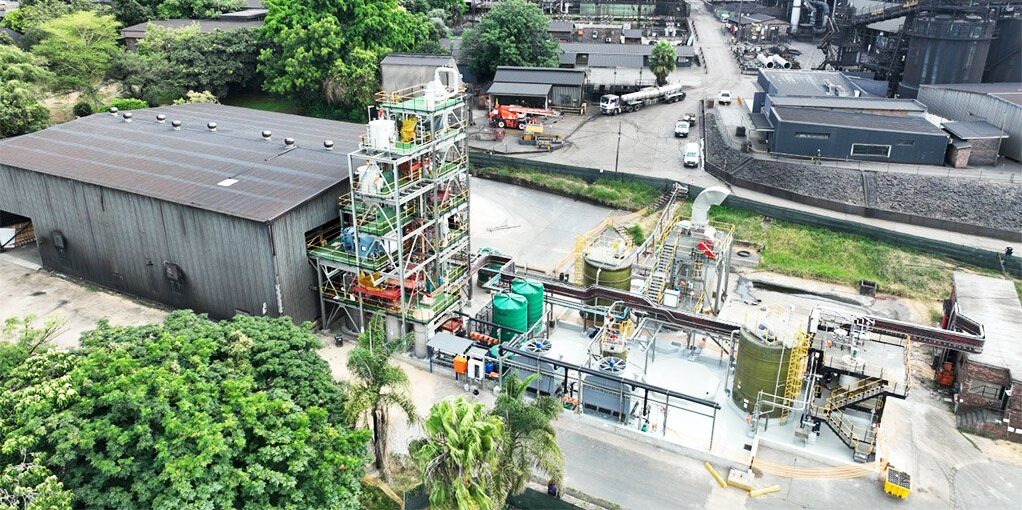
South Africa has taken a significant step forward in the global battery materials industry following the completion of the first phase of a battery-grade high-purity manganese sulphate monohydrate (HPMSM) plant by Manganese Metal Company (MMC) in Mbombela, Mpumalanga.
The project positions the country more strategically within the rapidly expanding and increasingly geopolitically sensitive battery supply chain, driven by rising global demand for electric vehicles (EVs) and energy storage technologies.
MMC is already evaluating a second and substantially larger phase of the project while simultaneously developing a patented ore-to-crystals production process that could support future large-scale growth without relying on the traditional metal-based route.
Expanding South Africa’s Battery Supply Chain Role
Chaired by mining executive Bernard Swanepoel, MMC is currently the world’s only producer of electrolytic manganese metal (EMM) outside China and the largest producer of high-purity selenium-free EMM globally.
Speaking at the International Manganese Institute (IMnI) annual conference in Rio de Janeiro, MMC Chief Marketing Officer Morné Ruiters detailed the company’s seven-year journey from the project’s conception in 2019 to the commissioning of the 6,000-ton-per-year HPMSM facility in 2026.
The planned second phase could increase production capacity by an additional 18,000 tons annually at the company’s Mbombela site.
The IMnI conference brought together major stakeholders from across the manganese value chain, including mining companies, alloy and chemical producers, traders, logistics firms, consultancies, and representatives from the steel and battery sectors.
EV Growth Reshapes Battery Material Demand
MMC’s investment comes amid rapid changes in the global electric vehicle market and evolving battery chemistry preferences.
According to the company, forecasts made in 2020 significantly underestimated the pace of EV adoption worldwide.
Global sales of battery electric and plug-in hybrid vehicles surpassed 21 million units in 2025, more than double earlier projections.
Battery chemistry trends also evolved differently than expected. Lithium iron phosphate (LFP) batteries, initially forecast to account for only around 10% of the market by 2025, captured nearly half of global EV battery demand last year, largely driven by strong growth in China.
These developments have reshaped industry expectations regarding future manganese consumption.
Flexible Production Strategy
In response to changing market conditions, MMC adopted a modular “metal-to-crystals” production strategy in 2024.
The approach converts part of the company’s existing high-purity manganese metal production into battery-grade sulphate.
The strategy allows MMC to leverage its established EMM production facilities, existing infrastructure, and decades of manganese purification expertise while limiting capital expenditure and enabling phased expansion.
According to Ruiters, flexibility has become essential in the evolving battery market.
“The battery market has changed dramatically since our initial studies were completed. Flexibility and optionality have become critical,” he said during the IMnI conference.
The company also emphasized that the ability to produce battery materials at industrial scale and at the purity levels required by battery manufacturers must now be matched by the capacity to adapt quickly to changing market realities.
Future Demand for Manganese Expected to Grow
MMC believes manganese will continue to play a critical role in future battery technologies despite the rapid rise of LFP batteries.
While LFP chemistry is expected to dominate mid-range EVs and stationary energy storage systems, nickel-manganese-cobalt (NCM) batteries are still expected to retain an important market share, particularly as manufacturers shift toward mid-nickel, high-voltage NCM formulations with higher manganese content.
The company also highlighted the potential of emerging lithium manganese-rich (LMR) battery technologies, which could further increase manganese demand while helping reduce battery costs.
Automotive and battery manufacturers continue to invest heavily in research aimed at overcoming the remaining technical barriers to commercializing LMR batteries.
Geopolitical Shifts Create New Opportunities
MMC noted that geopolitical tensions and changing trade policies are increasingly shaping investment decisions throughout the battery materials sector.
Trade restrictions, export controls, local-content requirements, and efforts by governments to diversify supply chains are creating new opportunities for alternative producers outside dominant markets.
The growing strategic importance of securing processed critical minerals has also led to new bilateral and multilateral agreements between countries seeking greater supply chain security.
Against this backdrop, MMC believes its South African production base offers a major competitive advantage in the global battery materials market.
For the company, the objective remains clear: align manganese supply growth with expanding global battery manufacturing capacity while maintaining the flexibility needed in a fast-changing industry.
About the Author