Koryx Copper Redesigns Namibia’s Haib Project to Boost Throughput, Cut Costs and Improve Economics
Koryx Copper has announced a significant redesign of its Haib Copper Project in southern Namibia after new metallurgical and engineering studies demonstrated the potential to increase processing capacity, improve ore grades, and reduce operating costs.
The revised development plan will raise annual processing capacity to approximately 40 million tonnes, up from the previous target of 35 million tonnes.
The changes are driven by an updated mineral resource estimate, an optimized mine plan, and the integration of coarse-particle flotation technology designed to reject waste earlier in the processing cycle.
Smarter Processing to Improve Economics
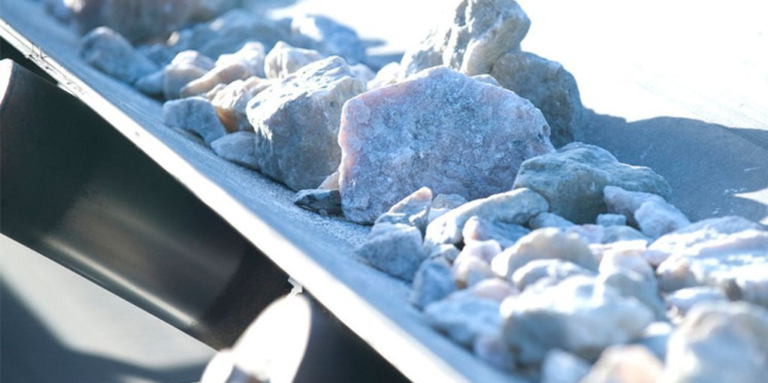
A key feature of the redesign is the adoption of coarse-particle flotation, a technology that allows up to 25% of run-of-mine material to be discarded as coarse tailings before entering conventional flotation circuits.
By removing low-value material at an earlier stage, Koryx aims to increase the copper grade entering the processing plant, reduce energy and water consumption, and lower tailings management costs.
The company expects flotation feed grades during the first decade of operations to improve to between 0.45% and 0.50% copper equivalent, a significant advantage for a large, low-grade porphyry copper deposit where profitability is highly sensitive to processing efficiency.
More Ore, Less Waste
The redesign is also expected to reduce the cut-off grade for sulphide ore from 0.225% copper to approximately 0.175% copper.
This could convert material previously considered waste into economically recoverable ore, increasing the mineable resource and potentially extending the project’s lifespan.
Test work has produced encouraging results. Material-sorting trials demonstrated that 12% to 20% of run-of-mine feed can be rejected while losing only 6% to 12% of contained copper.
Additional coarse-particle flotation testing showed a further 25% to 30% of mill feed could be removed with minimal metal losses.
Overall, Koryx estimates that around 35% of mined material could be rejected before intensive processing, while retaining 80% to 90% of the contained copper.
Simplified Flow Sheet
The company has selected conventional milling and flotation as the base processing route for all sulphide ore, eliminating the previously considered sulphide heap-leach option.
This simplification is expected to reduce project complexity and capital requirements while improving operational efficiency.
Oxide and transitional ores will continue to be treated through heap leaching, solvent extraction, and electrowinning to produce copper cathode.
Under the revised configuration, approximately 92% of mined material will pass through the sulphide processing circuit.
While total throughput could reach 40 million tonnes annually, only around 28 million tonnes of upgraded material would proceed to flotation after waste rejection.
Infrastructure and Production Plans
The redesigned operation will include:
- Three 14-million-tonne-per-year crushing and screening trains;
- Two 18.5-million-tonne-per-year milling and coarse-particle flotation circuits;
- Two 14-million-tonne-per-year conventional flotation trains; and
- A separate 3-million-tonne-per-year oxide and transitional ore heap-leach facility.
The flotation plant is expected to produce two saleable concentrates. The primary concentrate is projected to contain more than 20% copper along with gold credits of between 0.8 g/t and 1 g/t.
A secondary concentrate is expected to contain 10% to 15% copper and more than 3% molybdenum.
Both products are expected to be marketable to international smelters.
Power, Water and Sustainability
Koryx plans to source power through a 200 MVA connection to Namibia’s national grid, supported by solar photovoltaic generation and battery storage systems.
Water supply is expected to come from the Orange River, supported by off-site storage infrastructure capable of handling up to 20 million cubic metres annually.
The company is also evaluating the recovery of pyrite from flotation tailings to produce sulphuric acid and ferric sulphate for use in the heap-leach operation, potentially reducing reagent costs.
Permitting Progress
Environmental and permitting work is advancing alongside technical studies. Koryx has completed 13 specialist environmental assessments and expects to submit its environmental clearance application by mid-2026, with approval targeted during the first half of 2027.
Koryx President and CEO Heye Daun said the combination of higher throughput, improved feed grades, and a simplified processing flow sheet is expected to strengthen the project’s economics ahead of the upcoming pre-feasibility study, scheduled for completion before the end of 2026.
The redesign builds on the company’s March 2026 resource update, which outlined Haib as a large-scale copper, molybdenum, and gold project with an anticipated 24-year mine life and average annual copper production of approximately 92,000 tonnes in concentrate.
With the latest improvements, Haib is positioning itself as one of Namibia’s most advanced undeveloped copper projects and a potentially significant future supplier of critical minerals to global markets.
About the Author