Zambia Launches US$315 Million Leopard Hill Solar and Battery Project to Boost Power Supply and Energy Security
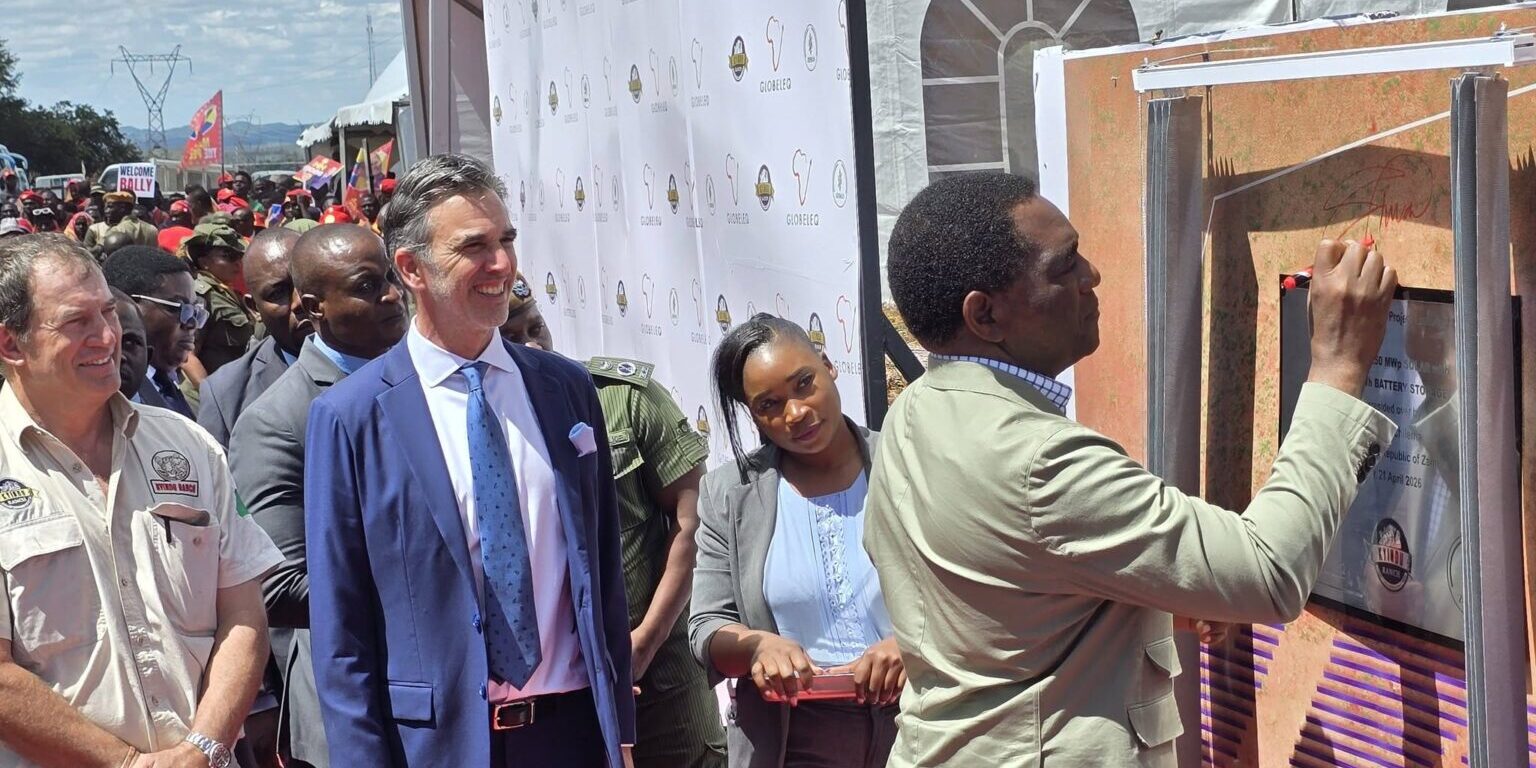
President Hakainde Hichilema has officially launched construction of a 250 megawatt solar photovoltaic plant and a 150-megawatt battery energy storage system at the Leopard Hill Solar Generation Station in Chongwe District.
The US$315 million hybrid energy project is expected to significantly strengthen Zambia’s electricity supply, improve grid stability, and enhance national energy security.
The launch, held along Leopards Hill Road, marks a major milestone in the country’s drive to expand power generation capacity and reduce electricity shortages.
President Hichilema said the integration of large-scale solar power with battery storage will improve reliability and ensure a more stable electricity supply.
He stressed the importance of diversifying Zambia’s energy mix and deepening collaboration with both public and private sector partners.
He added that the project reflects the success of ongoing energy sector reforms, which are improving the investment climate and unlocking new generation capacity.
The President reaffirmed Government’s commitment to sustaining these reforms to attract further investment.
Mr Hichilema also noted Zambia’s potential to generate up to 1,000 megawatts of solar power, pointing to ongoing developments such as the Chisamba Solar Projects, which together with Leopard Hill are expected to add around 450 megawatts to the national grid.
Acting Minister of Energy Rodney Sikumba said the project demonstrates the impact of reforms in the sector and reaffirmed Government’s commitment to timely delivery of energy infrastructure to improve nationwide access to electricity.
Lusaka Province Minister Sheal Mulyata said the project will create jobs and stimulate local economic activity in Chongwe District.
Developer representative Carl Elvin of Globeleq said the project had been inactive for nearly a decade but has now become viable due to improved policy and regulatory reforms that have strengthened its bankability.
He added that, in partnership with Kyindu Resources Limited and ZESCO Limited, the facility will be one of the largest battery storage projects in Africa.
ZESCO Board Chairperson Vickson Ncube said the initiative reflects stable policy direction and highlights the importance of modern, efficient energy systems.
He noted that the utility is upgrading its transmission network to meet rising demand while continuing to rely on independent power producers during periods of supply constraints.
Chongwe Member of Parliament Sylvia Masebo said the project will improve electricity access in the district, which has faced long-standing power challenges.
Rebecca Terzeon welcomed the investment, stating that reliable energy is critical to economic growth and regional trade. She added that Zambia remains well positioned to benefit from global clean energy investment.
She further noted that the United Kingdom will contribute £1.2 million toward Zambia’s energy compact and support key infrastructure projects, including the Zambia–Tanzania interconnector, as part of a shift from traditional aid to investment-focused cooperation.
About the Author