BYD adopts price parity strategy in South Africa as Chinese EV competition heats up in Africa’s growing electric and hybrid vehicle market
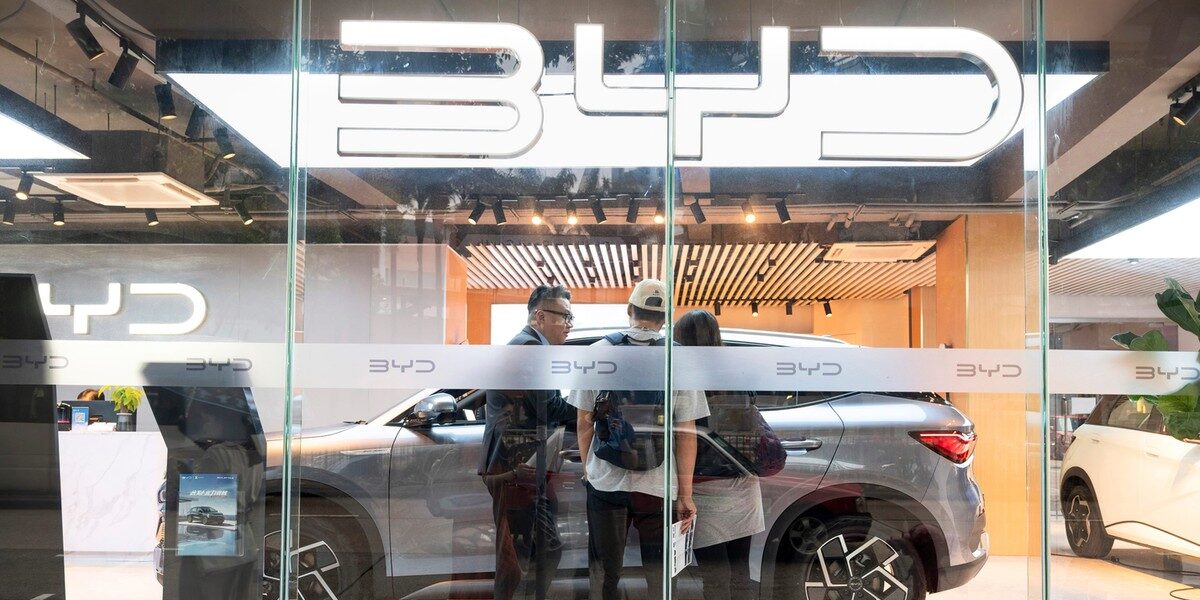
China’s BYD, the world’s largest manufacturer of new energy vehicles (NEVs), is deliberately avoiding aggressive price competition in South Africa even as rivalry intensifies in Africa’s second-largest automotive market.
South Africa has experienced a rapid rise in electric vehicles, plug-in hybrids, and traditional hybrids, with many models supplied by Chinese automakers offering highly competitive pricing to gain market share in a market still dominated by internal combustion engine vehicles.
Estimates suggest that more than one-third of vehicles sold in the country are imported from China or India.
However, BYD is taking a more cautious approach. Steve Chang, the company’s South Africa managing director, said the firm is prioritising long-term market positioning over short-term volume gains.
The country’s new energy vehicle (NEV) market remains in its early stages, but growth is accelerating.
Sales increased by 7.1% to 16,716 units in 2025, driven by rising demand for hybrid and plug-in hybrid models.
For the first time since entering South Africa in 2023, BYD disclosed its monthly performance, reporting 589 units sold in March.
This placed the company just behind Mercedes-Benz and Stellantis, but ahead of established brands such as Volvo.
Price discipline over discounts
Chang warned that aggressive discounting in the market could undermine long-term brand value by eroding resale prices and weakening consumer confidence.
Instead, BYD is pursuing a “price parity” strategy, positioning its electric and plug-in hybrid vehicles at levels comparable to conventional petrol and diesel models rather than relying on frequent promotions.
The company believes this approach will support sustainable adoption rather than short-term sales spikes driven by price cuts.
While BYD continues to expand its presence across Africa, it has no immediate plans to establish local manufacturing on the continent.
The company maintains that current demand levels are better served through imports and regional distribution networks.
In October, BYD signalled its long-term ambitions in Africa by opening its first brand centre in Tanzania, marking an early step in its expansion strategy across emerging EV markets.
Although it does not yet operate manufacturing facilities in Africa, BYD’s growing dealership and brand centre footprint highlights how global automakers are positioning themselves early in a market widely expected to see significant long-term growth as electrification gradually accelerates.
About the Author