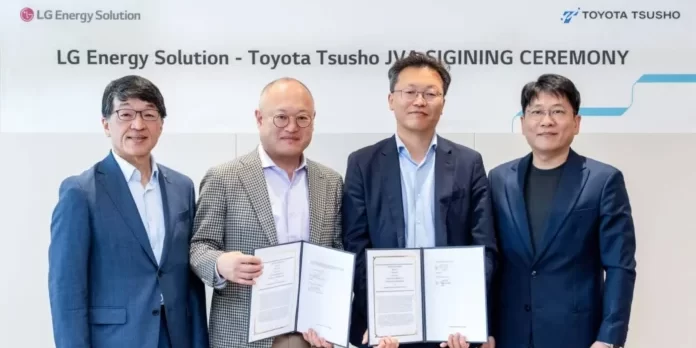
LG Energy Solution (LGES) and Toyota Tsusho are forming a joint venture, Green Metals Battery Innovations, focused on battery recycling in the United States.
The partnership plans to build a pre-processing facility in North Carolina, scheduled to begin operations in 2026.
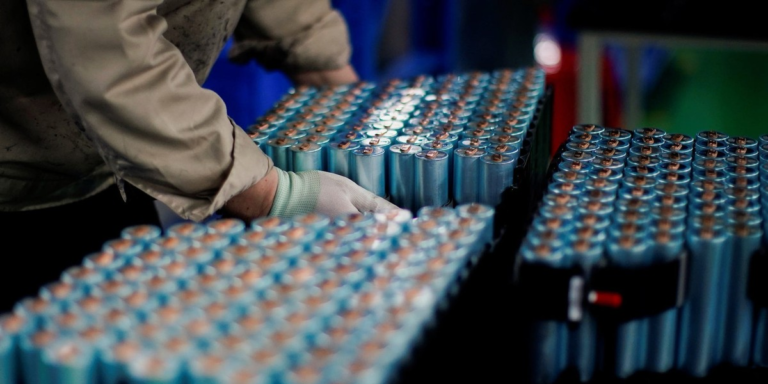
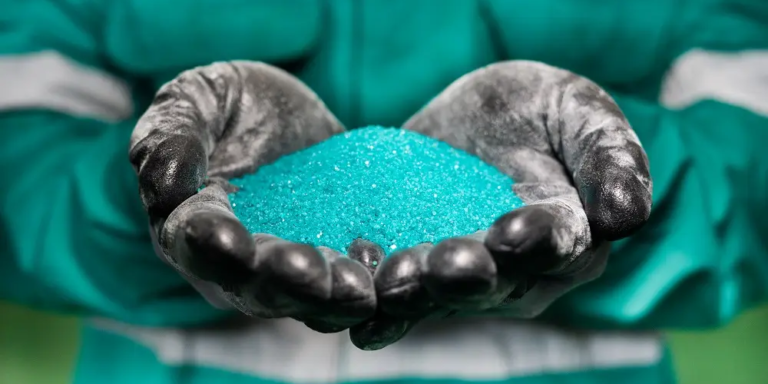
The new plant will specialize in recovering black mass—an intermediate product containing valuable battery metals—by processing up to 13,500 tons of battery scrap annually. This volume is equivalent to more than 40,000 electric vehicle batteries.
Initially, LGES will supply production scrap generated from manufacturing EV batteries for Toyota. This pre-processing facility marks the first phase of the recycling effort, with the recovered black mass destined for further post-processing to extract raw materials for reuse in new batteries.
The volume of end-of-life EV batteries available for recycling remains difficult to predict, as it depends on vehicle sales and their typical lifespan of 9 to 10 years.
Many batteries continue in second-life applications—such as stationary energy storage or low-speed electric vehicles—for another decade before being recycled.
However, a more immediate and predictable source of recyclable material comes from manufacturing scrap, unused batteries, and obsolete stock.
“This joint venture will not only help secure a stable supply of key battery materials but also enhance the competitiveness of our recycling business in North America,” said Chang Beom Kang, Chief Strategy Officer of LG Energy Solution.
“We are fully committed to leading the recycling market through innovative and differentiated technologies.”
The collaboration reflects a broader effort by both companies to regionalize battery supply chains. The joint venture aims to build a closed-loop battery ecosystem, where raw materials recovered from recycling are fed back into new battery production—advancing a circular economy in the battery industry.
The facility in North Carolina represents just one part of a larger strategy to localize the entire battery lifecycle.
Today, the extraction of valuable materials from black mass—such as lithium, nickel, and cobalt—is still dominated by China and a few other Asian nations.
For a sustainable and resilient supply chain, it is crucial that these processing steps are increasingly performed domestically.
Beyond environmental benefits, localizing battery recycling strengthens national security and reduces reliance on overseas suppliers.
It also mitigates the costs and uncertainties of long-distance material transport. In recent years, North America has seen growing investment in battery recycling infrastructure to meet these goals.
Toyota has been expanding its battery recycling capabilities globally. In February 2025, the company unveiled new recycling technologies aimed at lowering carbon emissions and improving material recovery.
In the U.S., Toyota partnered with Cirba Solutions in 2023 for battery recycling and previously struck a material supply deal with Redwood Materials.
Toyota also began collaborating with China’s CATL in 2019 on recycling and other battery lifecycle initiatives.
Meanwhile, Toyota and LGES are also deepening their cooperation on battery production. Toyota Motor North America recently secured a deal with LG Chem for cathode materials for its North Carolina battery plant, with deliveries set to begin in 2025.
From that year forward, LGES will also supply Toyota with battery modules totaling 20 gigawatt-hours annually.
These modules will use high-nickel NCMA pouch cells and power Toyota’s upcoming electric vehicles built in the U.S.
About the Author