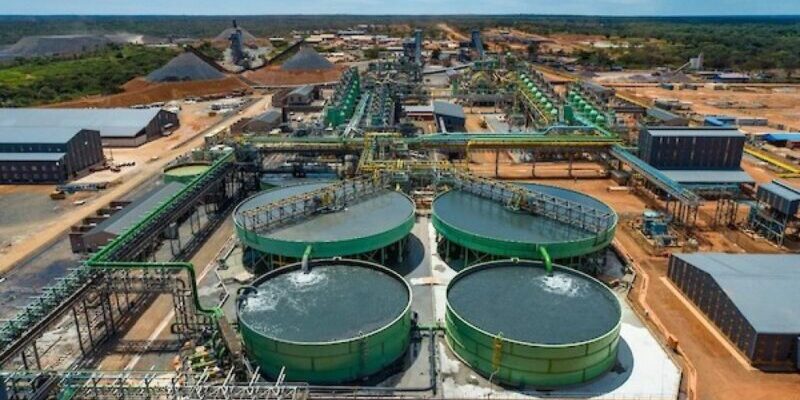
Ivanhoe Mines has announced plans to commission its state-of-the-art copper smelter at the Kamoa-Kakula copper complex in the Democratic Republic of Congo (DRC) in early September 2025.
The first anode production is expected to follow shortly, in October 2025.
The announcement was made on Thursday, June 11, 2025, marking a major milestone for what is set to become the largest copper smelting project in Africa.
Under construction since 2011, the smelter is designed to process up to 500,000 tonnes of copper concentrate per year.
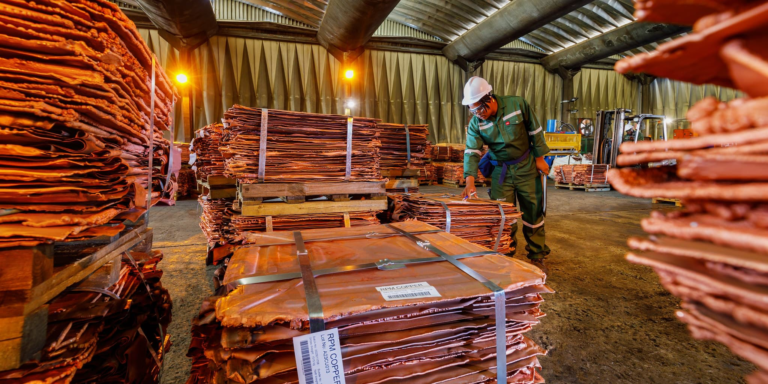
It will produce blister copper—an intermediate product in anode production—with a purity of approximately 99%.
During the initial phase, the facility will operate at 50% capacity, processing around 250,000 tonnes of concentrate annually.
According to industry analysts, this vertical integration strategy will allow Ivanhoe Mines to capture more value from its copper production, reinforcing its position in the global copper value chain and enhancing the long-term economic viability of the Kamoa-Kakula project.
Ivanhoe has already secured offtake agreements for 80% of the smelter’s output through commercial contracts with Chinese mining giants Zijin Mining and CITIC Metal.
These agreements cover a period of three years, ensuring strong initial market demand and financial stability for the smelting operation.
Recognizing the energy-intensive nature of smelting operations, Ivanhoe Mines has prioritized energy security ahead of the smelter’s commissioning.
Earlier in 2025, the company signed an agreement to boost hydroelectric capacity dedicated to the Kamoa-Kakula complex to 100 megawatts (MW).
Combined with the 50 MW already supplied by the national grid, the project will initially have access to 150 MW of power.
Further increases are anticipated by October 2025, when Turbine No. 5 at the Inga II hydroelectric dam—offering 178 MW of additional capacity—is scheduled to come online.
Once fully operational, the Kamoa-Kakula smelter will not only position the DRC as a regional hub for copper refining, but also contribute to local value creation, job growth, and industrialization.
It represents a significant move toward reducing Africa’s reliance on overseas refining and advancing resource beneficiation on the continent.
About the Author