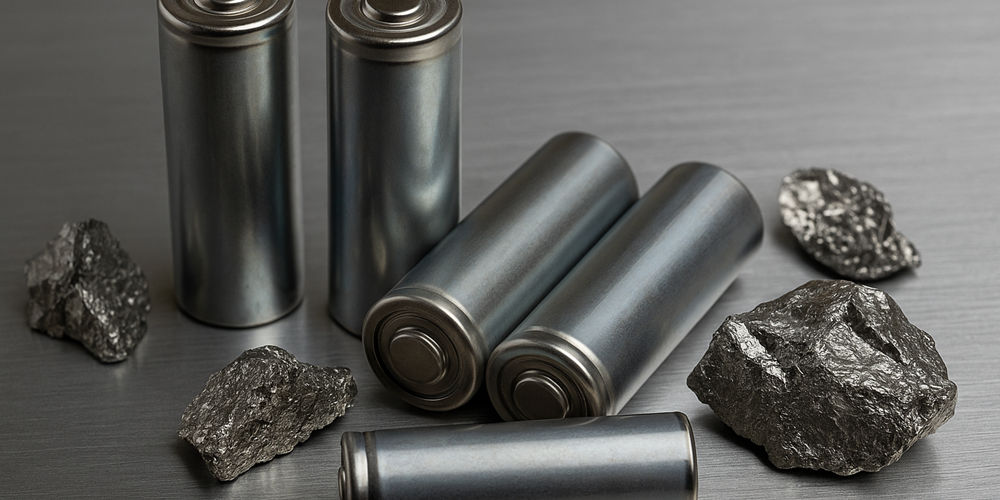
India Plans $313 Million Incentive Scheme to Boost Domestic Lithium and Nickel Processing for EV Supply Chain
India’s Ministry of Mines is expected to soon announce a new incentive policy aimed at strengthening domestic processing of lithium and nickel, with a proposed outlay of around ₹30 billion ($313.5 million), according to sources familiar with the matter.
The sources, who requested anonymity because they were not authorised to speak publicly, said the policy is intended to support the development of critical mineral processing capacity within India. The Ministry of Mines did not immediately respond to requests for comment.
Strategic Focus on Critical Minerals
The proposed policy forms part of India’s broader strategy to secure supply chains for electric vehicle (EV) production and reduce dependence on imported refined materials.
Lithium and nickel are essential components in EV battery manufacturing. India is targeting 30% electric car penetration and 80% adoption of electric two-wheelers by 2030, up from current levels of approximately 6% and 9% respectively.
Incentives Linked to Processing Capacity
According to earlier reporting, the incentive scheme is expected to set minimum capacity thresholds for eligible projects.
Lithium processing facilities would need to have a capacity of at least 30,000 tonnes, while nickel processing plants would require a minimum capacity of 50,000 tonnes to qualify for support.
The policy is designed to encourage large-scale investment in refining and processing infrastructure, rather than relying solely on raw material imports or small-scale facilities.
Part of a Broader Critical Minerals Push
India has been steadily increasing its focus on critical minerals, particularly those linked to energy transition technologies such as batteries, renewable energy systems, and advanced electronics.
In previous statements, government officials indicated that lithium and nickel were among a shortlist of priority minerals being considered for targeted industrial policy support.
The planned incentive scheme highlights India’s efforts to build a more integrated EV supply chain by developing domestic processing capacity for key battery inputs.
If implemented, the policy could accelerate investment in large-scale lithium and nickel processing plants, strengthening India’s position in the global electric vehicle value chain and reducing reliance on imported refined materials.
About the Author