Rio Tinto Strengthens Global Mining Portfolio with $1.4 Billion Lithium Expansion in Argentina and Major African Investments
Rio Tinto has reinforced its position in the global energy transition and mining sector with the inauguration of two new lithium facilities in Argentina, part of a $1.4 billion investment aimed at expanding production of a critical mineral used in electric vehicle batteries and energy storage systems.
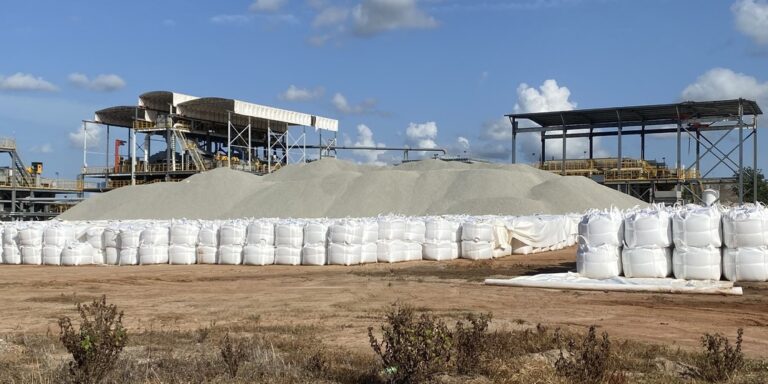
The Anglo-Australian mining giant officially opened the Sal de Vida plant and the Fénix 1B expansion in Argentina’s Catamarca province.
Together, the projects add 25,000 tonnes per year of lithium carbonate equivalent (LCE) production capacity, strengthening the company’s footprint in one of the world’s fastest-growing lithium-producing regions.
Sal de Vida is expected to contribute 15,000 tonnes of annual LCE output, while the Fénix 1B expansion will add another 10,000 tonnes once fully operational.
The new facilities mark a significant step in Rio Tinto’s strategy to become a major global lithium supplier as demand for battery minerals continues to increase.
Speaking during the inauguration, Rio Tinto Chief Executive Officer Simon Trott said the company is targeting 200,000 tonnes of annual lithium production capacity globally by 2028, underscoring its long-term commitment to the sector.
The company is also advancing development of its Rincón lithium project in Argentina’s Salta province, which is expected to deliver an additional 60,000 tonnes of annual production capacity. Rio Tinto’s broader lithium expansion forms part of a strategic response to rising demand from electric vehicle manufacturers and renewable energy storage markets worldwide.
A key feature of the Argentine developments is the use of direct lithium extraction (DLE) technology.
The method has the potential to accelerate production timelines compared with traditional evaporation ponds, although its long-term economics and scalability remain under evaluation across the industry.
Major African Investments Continue
Beyond South America, Rio Tinto is simultaneously advancing several large-scale projects across Africa.
In Guinea, the company is a major investor in the Simandou iron ore project, one of the world’s largest undeveloped iron ore deposits.
Rio Tinto’s contribution is estimated at approximately $6.2 billion, forming part of a broader $11.6 billion development programme that includes mining operations, railway infrastructure and port facilities.
The Simandou development is designed to support exports of up to 120 million tonnes of iron ore annually at full production.
Rio Tinto’s SimFer joint venture, which controls blocks three and four of the project, is targeting around 60 million tonnes per year.
In South Africa, Rio Tinto approved a $473 million investment to restart the Zulti South mineral sands project at Richards Bay Minerals.
The project is expected to extend the operation’s lifespan until 2050, with commercial production anticipated from late 2028.
The company also maintains mineral sands operations in Madagascar through QIT Madagascar Minerals, which produces ilmenite for international industrial markets.
Expanding Across Strategic Minerals
Rio Tinto’s latest investments highlight a diversified approach to future commodities demand.
While its Argentine assets target the growing battery minerals market, its African operations are focused on supplying iron ore and mineral sands that remain essential to global infrastructure, manufacturing and industrial development.
As governments and industries accelerate decarbonisation efforts, Rio Tinto is positioning itself across multiple critical mineral value chains, balancing investments in traditional bulk commodities with growing exposure to minerals central to the global energy transition.
About the Author