Giyani Metals Boosts Funding for High-Purity Manganese Sulphate Monohydrate Plant in Johannesburg
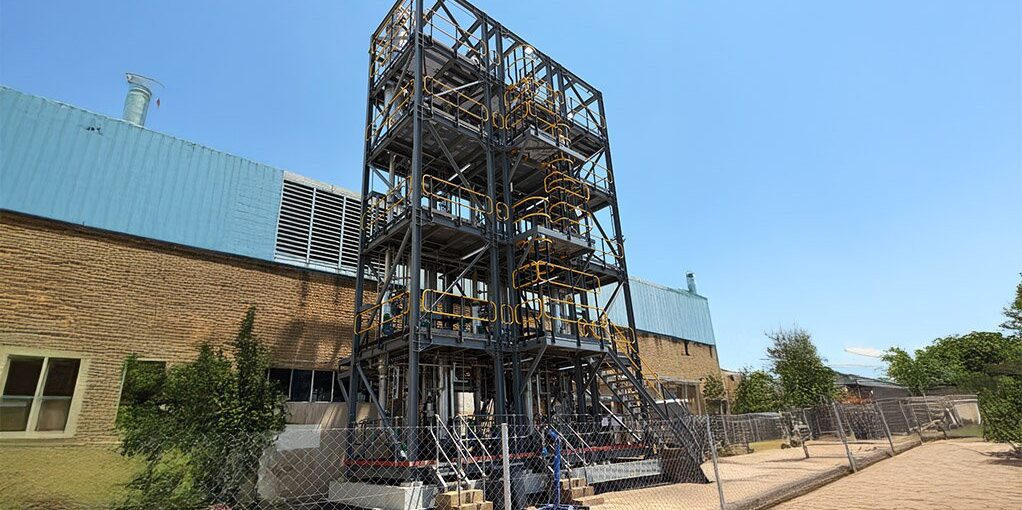
Giyani Metals has received an additional R29.9-million from South Africa’s state-owned Industrial Development Corporation (IDC) to support its high-purity manganese sulphate monohydrate (HPMSM) demonstration plant in Johannesburg.
HPMSM is a refined precursor material used in the production of cathode powders for lithium-ion batteries deployed in electric vehicles (EVs) and energy storage systems (ESSs).
“We would like to thank the IDC for being such a supportive partner,” said Giyani interim executive chairperson Nigel Robinson in a media release to Mining Weekly on Friday, March 20.
The additional R29.9-million increases the total loan facility to R264.3-million, with the maximum combined loan facility under IDC agreements now at R329.9-million.
Although Giyani does not intend to resume operation of the demonstration plant immediately, the completion deadline has been extended to June 30.
The ongoing operation of the plant has provided valuable data on reagent consumption at scale and contributed to operational knowledge of the crystallisers and purge management processes.
This data will be incorporated into the company’s definitive feasibility study (DFS), now expected to be completed during the second quarter of 2026.
The HPMSM produced with IDC funding is being prepared for analysis by potential offtakers.
“We look forward to announcing these results to the market once available, enabling Giyani to secure offtake agreements and advance project financing discussions,” Robinson added.
Giyani is developing the K.Hill battery-grade manganese project in neighboring Botswana, where a commercial-scale HPMSM plant is planned.
The company aims to become a leading producer of sustainable, low-carbon, high-purity battery-grade manganese for EVs and ESSs using its proprietary hydrometallurgical process.
Under the addendum to its existing convertible loan facility agreements with the IDC, Giyani has provided additional security over certain project assets.
The company has also committed at least R40-million to its subsidiaries to support DFS completion.
If IDC holds more than 10% of Giyani’s issued shares, it will have the right to nominate one director to the board.
Previously, high-purity manganese oxide produced at the Johannesburg demonstration plant met Phase 1 qualification standards set by US battery technology company Charge CCCV, allowing the project to advance to Phase 2 of the company’s digital DNA Supply Chain Qualification Programme.
A preliminary economic assessment (PEA) published in July 2023 evaluated a base-case scenario for the K.Hill project, featuring a single production line with a feed capacity of 200,000 t/y of high-purity manganese oxide, producing HPMSM over a 57-year life-of-project, including a 49-year life-of-mine plus eight years of stockpile rehandling.
The upside case considered a second production line from year five, doubling feed capacity to 400,000 t/y and reducing the life-of-project to 31 years.
Project infrastructure includes a crushing facility, processing area with grinding, extraction, purification, fluoride polishing, crystallisation, storage, water treatment, reagent handling, and tails management, as well as a sulphur dioxide plant, utilities, and low-voltage switch rooms.
A 4.5 MW solar plant covering 7.6 ha is planned 1.2 km west-northwest of the processing plant entrance.
The $282.64-million project has a pretax net present value (8% discount rate) of $1.21-billion, an internal rate of return of 33%, and a payback period of two years.
Construction is expected to begin in 2027, with commercial plant ramp-up in 2028 and full production by 2030.
The demonstration plant has provided invaluable operational data, supporting a derisked process flowsheet for the planned full-scale Botswana plant.
Contractors and consultants involved include SRK Consulting (feasibility study), Mintek (metallurgical testwork), Tetra Tech (metallurgical programme), Wood (lead DFS consultant), and Minopex (demonstration plant operations).
About the Author