Tshipi Manganese Mine Boosts Sales and Production as Manganese Prices Rise, Jupiter Mines Reports
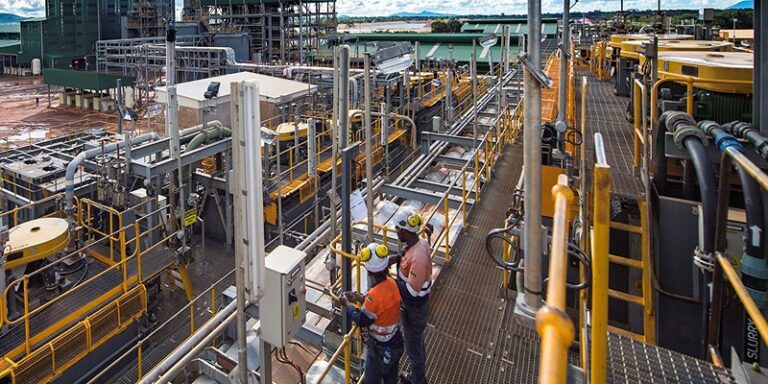
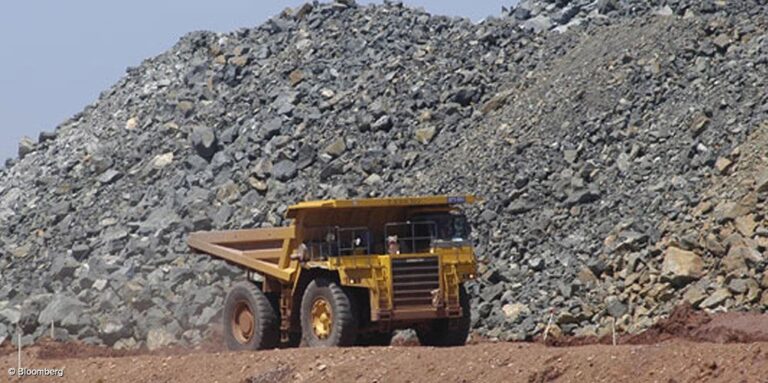
The Tshipi manganese mine, located in the Kalahari Manganese Field in South Africa’s Northern Cape province, delivered a solid quarterly performance, recording higher sales and production volumes in line with improving manganese prices, according to ASX-listed Jupiter Mines’ quarterly activities report for the period ended December 31.
Jupiter Mines holds a 49.9% beneficial interest in Tshipi é Ntle Manganese Mining, the operator of the Tshipi mine.
During the quarter, production was deliberately weighted toward high-grade ore to capitalise on favourable market conditions, resulting in a 10% increase in high-grade output. Total production volumes reached 840,688 tonnes.
Sales volumes rose by 4% quarter-on-quarter to 867,619 tonnes, with Tshipi remaining on track to achieve its targeted full-year sales guidance.
Earnings before interest, tax, depreciation and amortisation (EBITDA) amounted to $21.6 million, representing a 19% decrease compared with the previous quarter.
The decline was largely attributed to adverse foreign exchange movements. Cash balances declined marginally by 2% to $137.4 million.
The operation recorded two lost-time injuries during the quarter, both resulting from slip-and-fall incidents.
Manganese Market Overview
Jupiter Mines reported supportive manganese market conditions during the quarter, with prices strengthening across both seaborne and portside markets.
This was primarily driven by low inventory levels in China particularly for high grade oxide ore combined with tighter export supply.
As prices for high-grade material increased, customers turned increasingly to semi-carbonate ore, which also supported overall pricing.
Toward the end of the quarter, and following the reporting period, seasonal restocking ahead of the Chinese Spring Festival, together with a stronger Chinese yuan, provided further upside to manganese ore prices.
Demand in China remained steady, with alloy producers continuing to operate at high utilisation rates and consuming significant volumes of manganese ore.
Although alloy producers’ margins remained under pressure due to oversupply in the alloy market, production levels and ore arrivals were broadly unchanged from the previous quarter.
Consequently, manganese ore inventories remained stable at approximately 4.3 million to 4.4 million tonnes—well below long-term historical averages.
Jupiter also noted strong demand in northern China, where ongoing investment in new and expanded alloy plants, particularly in Inner Mongolia, is focused on improving long-term efficiency through increased use of renewable energy.
Acquisition Update
JSE-listed Exxaro Resources announced on January 29 that it had satisfied all conditions for the acquisition of several manganese mining interests in South Africa, including a 50.1% stake in Tshipi and a 19.99% interest in Jupiter Mines.
Formal completion of the transaction is expected on or before February 27. Exxaro will acquire the 19.99% shareholding in Jupiter from Ntsimbintle Holdings at a price of R3.69 per Jupiter share. At current exchange rates, this equates to approximately A$0.33 per share.
Following completion, Jupiter will retain its 49.9% interest in Tshipi and continue to exercise joint control over the operation.
There will be no changes to Jupiter’s rights under the Tshipi shareholders’ agreement, including its pro rata marketing rights.
Jupiter has welcomed Exxaro as a major shareholder and joint venture partner in Tshipi, noting that the investment strengthens its growth platform and aligns with its strategy to consolidate assets and create value across the Kalahari Manganese Field.
About the Author