Sovereign Metals Discovers High-Grade Heavy Rare Earths in Tailings at Kasiya Project in Malawi
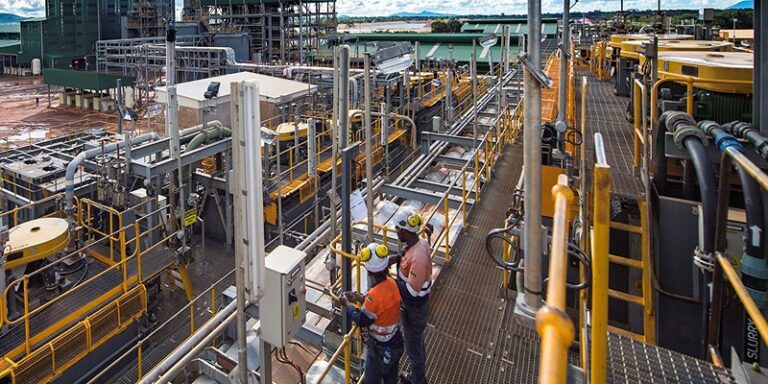
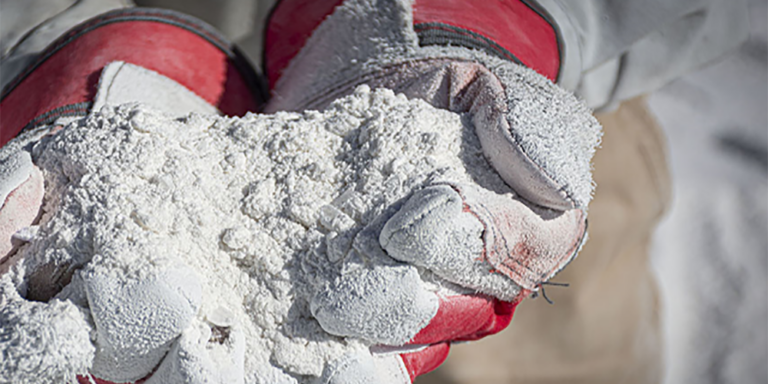
AIM- and ASX-listed Sovereign Metals has successfully recovered a monazite concentrate containing high-value heavy rare earth elements (REEs) from the tailings stream generated during rutile processing at its upgraded Lilongwe laboratory facilities in Malawi.
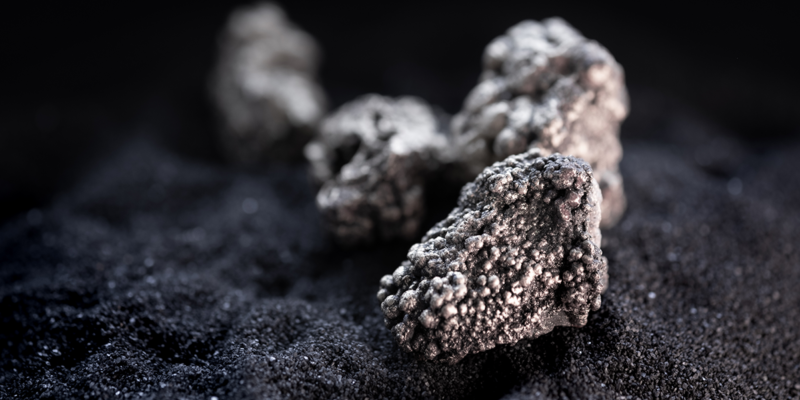
The monazite product was recovered from material that would otherwise be discarded—specifically, the non-conductor tailings stream produced during the electrostatic separation of a heavy mineral gravity concentrate derived from ore at the company’s Kasiya rutile and graphite project.
Sovereign Metals said that producing a monazite concentrate would require no additional complex processing, as it is generated as a by-product of the existing rutile processing route.
Chemical analysis of magnetic concentrates from processed resource drilling samples, conducted by Scientific Services South Africa, confirmed favourable rare earth oxide (REO) distributions within the monazite concentrate.
Preliminary results show the concentrate contains exceptionally high heavy rare earth content, averaging 2.9 percent combined dysprosium and terbium, with peak values of up to 3.9 percent. .
The material also averages 11.9 percent yttrium, reaching as high as 17.3 percent, alongside significant light rare earth content, including 21.8 percent neodymium and praseodymium.
Sovereign Metals said this rare earth composition distinguishes Kasiya from the world’s major rare earth producers. The five largest global operations, which collectively account for around 70 percent of global rare earth production, are dominated by light rare earth elements, with heavy rare earths present only in trace amounts or absent altogether.
“These strategically critical heavy rare earths, urgently required by the United States, Japan, and the European Union for advanced technology, defence, and industrial supply chains, are largely unavailable from existing major producers,” the company said.
Managing Director and CEO Frank Eagar described the development as transformational for the Kasiya project.
“This is an exceptional outcome that has the potential to fundamentally enhance Kasiya’s strategic importance,” Eagar said. “Using simple processing, our upgraded laboratory has recovered a valuable monazite concentrate from rutile tailings with heavy rare earth content that the world’s major producers simply cannot match.”
“These are precisely the elements that matter most to countries seeking to secure and strengthen critical mineral supply chains. Dysprosium and terbium are essential for permanent magnets used in advanced technologies such as robotics, fighter jets, guided missiles, and naval propulsion systems. Yttrium plays a vital role in protecting jet engines and hypersonic vehicles from extreme temperatures.”
Eagar also noted that China imposed export controls on all three elements in April 2025, leaving Western supply chains increasingly exposed.
“What makes this value addition particularly significant is that the monazite concentrate was recovered from our rutile processing tailings stream,” he added. “We are not proposing a complex, standalone rare earth operation. Instead, we have demonstrated the ability to recover critically strategic rare earths from material that would otherwise be discarded.”
Kasiya’s rutile output is intended to support aerospace-grade titanium production, while its graphite resources are targeted for battery anodes and traditional industrial applications.
“With rutile, graphite, and now the potential to produce critical heavy rare earths, Kasiya represents a uniquely strategic mineral project,” Eagar said. “We have an exciting work program ahead as we further define and advance the heavy rare earth opportunity.”
About the Author