South Africa’s MRD Bill Could Legalise Artisanal Mining and Create Jobs in the Critical Minerals Sector
In South Africa’s coal-rich Mpumalanga province, grey smog blankets the skies as miners continue to extract black rock that has powered the country’s economy for decades.
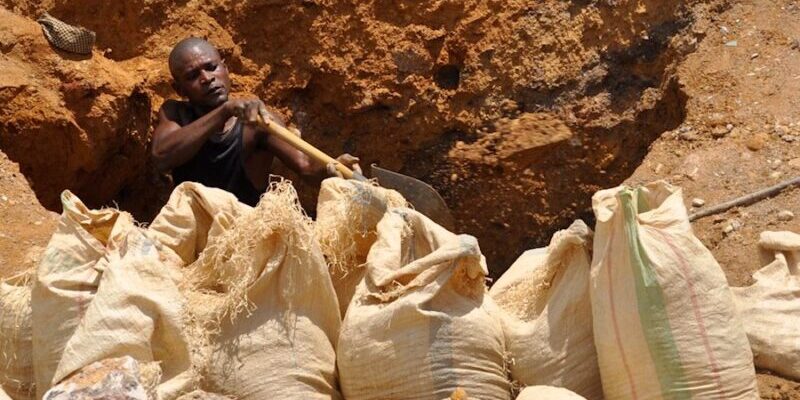
Among them is Mooi Masuku, an artisanal coal miner with 17 years of experience, who believes a new law to formalise informal mining is crucial for job protection and future opportunities.
“We want to work, and we want to work legally,” Masuku said outside his home in the Nomzamo informal settlement in Ermelo.
Submissions for public comment on the Mineral Resource Development (MRD) Bill closed last week. The proposed legislation will now go before Parliament for review.
If enacted, the Bill could reshape the mining landscape for thousands of small-scale miners like Masuku.
South Africa remains heavily reliant on coal, but the global shift toward clean energy raises fears of mass unemployment in coal-dependent communities.
Official data shows about 400,000 jobs are tied to the coal sector, including both direct mining roles and informal economic activities around mines.
Despite global efforts to move away from coal—cemented at the COP28 climate talks in Dubai (2023)—the South African government continues to classify coal as a “critical mineral” because of its economic importance.
A similar stance has been taken in the United States, where coal used in steel production has been designated as critical.
South Africa, however, is also rich in widely recognised critical minerals such as copper and manganese, which are essential for renewable energy infrastructure, from solar panels to wind turbines.
The National Association of Artisanal Miners (NAAM) argues that small-scale miners should play a role in extracting these future-facing resources.
“The critical mineral boom should benefit artisanal miners … we want to mine all the minerals underneath our feet,” said NAAM spokesperson Zethu Hlatshwayo.
Formalisation: Opportunities and Challenges
The MRD Bill proposes introducing artisanal mining permits and creating designated zones for small-scale miners. Advocates say this could:
Boost job creation and provide safer, regulated work.
Improve environmental compliance.
Enable artisanal miners to transition into mining critical minerals as coal declines.
“Artisanal miners could be trained to take part in the future mining of critical minerals,” noted Kangwa Chisanga Jr, a Zambian legal studies lecturer.
However, concerns remain. Critics argue that strict requirements—such as needing ministerial consent for ownership changes—could over-regulate the sector, drive up costs, and unintentionally fuel more illegal mining.
NAAM has also raised red flags, warning that the Bill is vague, restricts artisanal miners to shallow surface mines, and could unfairly saddle them with costly site rehabilitation obligations.
“We are concerned that the permit application process will be lengthy and costly,” said Bonginkosi Buthulezi, an artisanal miner in Ermelo.
Wider Pushback and Concerns
Agricultural lobby group AgriSA has opposed the Bill, warning that expanded artisanal mining could threaten water resources, farmland, and food security.
Meanwhile, human rights organisations like Global Witness stress that the solution lies not in excluding artisanal miners but in cleaning up supply chains and providing safer, legal opportunities.
With unemployment at 33%, the stakes are high. For Masuku and thousands like him, legalisation could mean turning precarious work into dignified, sustainable livelihoods.
“To improve our communities, we need to share in the mineral wealth of our country,” Masuku said.
As the MRD Bill heads to Parliament, artisanal miners are determined to be recognised as allies in South Africa’s mining future—not adversaries.
About the Author