Northern Graphite Signals Okanjande Mine Restart as Project Manager Recruitment Advances
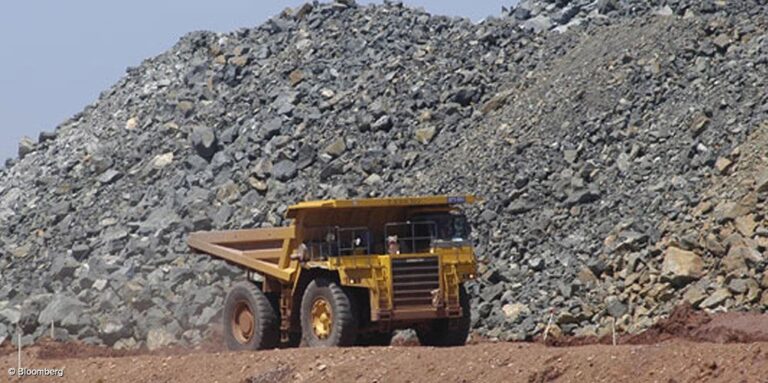
Northern Graphite has taken its clearest operational step yet toward restarting Namibia’s long-idled Okanjande graphite mine by advertising for a project manager to oversee engineering, construction, commissioning and handover in a remote operating environment.
The recruitment drive signals a shift from passive care-and-maintenance status to active execution planning, although the company continues to condition any restart timeline on securing financing.
Restart Timeline Tied to Funding
Northern describes Okanjande as a fully permitted former producer that operated between 2017 and 2018. The mine has a planned production rate of approximately 31,000 tonnes per year and, according to the company, could be restarted within roughly 12 months of a formal construction decision.
However, that schedule remains explicitly dependent on capital availability.
The financing caveat is significant. Northern has repeatedly linked Okanjande’s return to funding conditions, and its restart timelines have shifted over time.
In August 2023, alongside a preliminary economic assessment (PEA) evaluating the relocation of processing capacity from Okorusu to the mine site, the company stated that its goal was to restart production in late 2024, subject to financing.
More recent industry commentary suggests Namibia concentrate output is now part of a longer-term ramp extending toward 2028.
Resource Base and Mine Life
Okanjande is not a marginal asset. Northern states that the project hosts 1.6 million tonnes of battery-grade graphite within measured and indicated (M&I) resources and carries a current mine life of approximately 10 years.
The August 2023 PEA provided more detailed resource figures across three material categories:
Weathered material: 5.9 million tonnes containing 248,000 tonnes of graphite (M&I), plus 0.5 million tonnes containing 17,000 tonnes (inferred).
Transitional material: 1.2 million tonnes containing 53,000 tonnes of graphite (M&I), plus 0.1 million tonnes containing 2,000 tonnes (inferred).
Fresh rock: 24.2 million tonnes containing 1.3 million tonnes of graphite (M&I), plus 7.2 million tonnes inferred containing 0.4 million tonnes.
As standard under reporting codes, the company emphasised that mineral resources are not mineral reserves and therefore do not yet demonstrate economic viability.
Processing Relocation Strategy
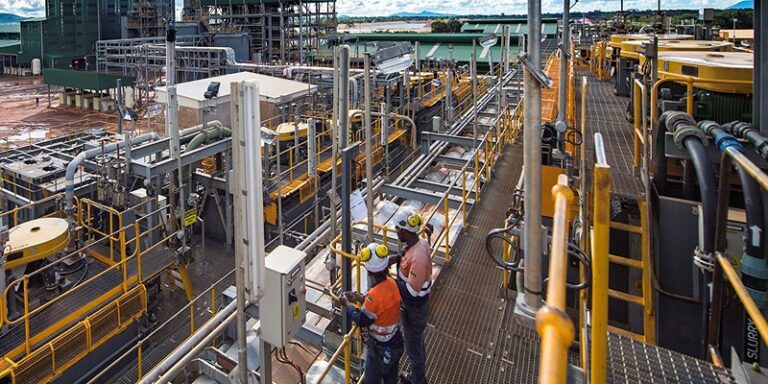
A central element of Northern’s restart strategy is relocating the processing plant from Okorusu to the Okanjande mine site.
The PEA concluded that, although relocation would increase upfront capital expenditure, it would lower operating costs, reduce emissions and eliminate the need to haul mineralised material roughly 70 kilometres to Okorusu.
The move is also positioned as enhancing long-term scalability and sustainability.
The current project manager recruitment highlighting contractor governance, compliance with Namibian mining, labour, environmental and safety regulations, and operational readiness aligns directly with this relocation-and-restart model.
In practical terms, such a role typically emerges when a project transitions from study phase to implementation planning. Responsibilities would likely include finalising engineering design, managing EPC or EPCM interfaces, coordinating construction sequencing and preparing systems for commissioning and operational handover.
Execution Planning, Not Final Commitment
Despite these operational signals, Northern’s public messaging remains measured. The restart is described as achievable within one year of a construction decision, but only once financing is secured.
The hiring initiative therefore represents a move toward execution readiness rather than confirmation that full restart funding is already in place.
Nonetheless, the direction is clear. After years of deferral linked to capital constraints, Northern Graphite is now staffing for delivery at Okanjande, underpinned by a substantial measured-and-indicated resource base and a plant relocation plan aimed at improving operating economics and long-term project scalability.
About the Author