Nigeria Partners with South Korea’s AEDC to Launch Africa’s First Full-Scale Electric Vehicle Manufacturing Plant
Nigeria has taken a significant step toward establishing a domestic electric vehicle (EV) industry following the signing of a Memorandum of Understanding (MoU) with South Korea’s Asia Economic Development Committee (AEDC).
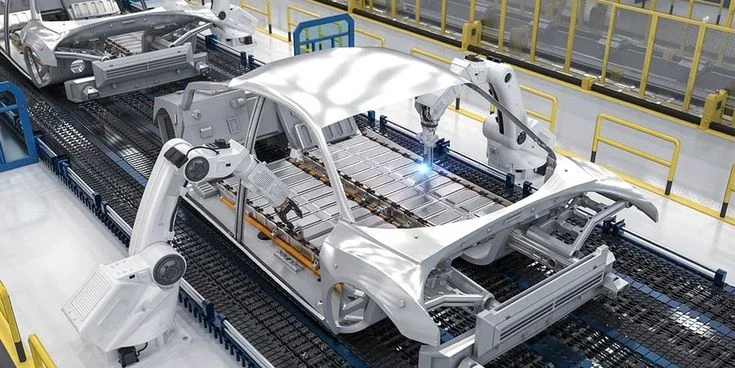
The agreement aims to establish what officials describe as Africa’s first large-scale EV manufacturing plant.
The MoU was signed on January 30, 2026, by Senator John Enoh, Nigeria’s Minister of State for Industry at the Federal Ministry of Industry, Trade and Investment (FMITI), and AEDC Chairman Yoon Suk-hun.
According to the National Automotive Design and Development Council (NADDC), the partnership also includes the development of nationwide EV charging infrastructure.
The initiative aligns with Nigeria’s National Energy Transition Plan (ETP) and the National Automotive Industry Development Plan (NAIDP), both of which prioritize industrialization, local manufacturing, and decarbonization.
Phased Implementation and Production Capacity
The project will be implemented in stages. The initial phase will focus on vehicle assembly, with gradual progression toward full-scale in-country manufacturing, including local component production.
Once fully operational, the plant is projected to produce up to 300,000 vehicles annually and generate approximately 10,000 direct and indirect jobs.
Officials describe the facility as a vertically integrated operation encompassing assembly, manufacturing, and supporting charging infrastructure.
Addressing Structural Challenges in Nigeria’s Auto Sector
Nigeria’s automotive industry faces long-standing structural constraints, including:
Limited local component manufacturing capacity
High vehicle assembly costs
Heavy dependence on vehicle imports
The country imports between 400,000 and 720,000 vehicles annually, with an estimated 74–90% consisting of used vehicles. In 2023 alone, imports reached approximately 700,000 units.
Passenger vehicle imports were valued at $1.05 billion in 2024, positioning Nigeria among the world’s largest markets for pre-owned cars.
By establishing domestic EV manufacturing, the government aims to reduce import dependence, improve value retention within the economy, and stimulate technology transfer.
Policy Support for Electric Mobility
To accelerate EV adoption, the federal government introduced a 20 billion naira (approximately $12 million) consumer credit scheme in December 2024.
The program supports the purchase of locally assembled electric vehicles, motorcycles, and tricycles.
The scheme partners with domestic manufacturers, including:
Innoson Vehicle Manufacturing
Nord Automobiles
CIG Motors (GAC brand distributor)
Peugeot Automobile Nigeria
Mikano International
Jets Motor Company
NEV Electric
DAG Industries
Earlier EV initiatives in Nigeria including a 2022 collaboration involving the National Agency for Science and Engineering Infrastructure (NASENI) and subsequent pilot assembly projects were limited in scope and did not reach full industrial scale.
In contrast, the AEDC-backed facility is positioned as a comprehensive manufacturing ecosystem rather than a pilot or semi-knocked-down (SKD) assembly operation.
Africa’s EV Landscape
Electric vehicle adoption across Africa remains nascent but is gradually expanding. By mid-2025, the continent had over 30,000 EVs in operation, representing less than 1% of total vehicle sales.
Ethiopia leads the continent with an estimated 100,000 EVs, followed by Ghana (17,000), Morocco (10,000), South Africa (6,000), Egypt (3,500–4,000), and Kenya (nearly 3,800).
Most electric vehicles on the continent are motorcycles or commercial fleets, with adoption constrained by high upfront costs, limited charging infrastructure, and financing barriers.
Strategic Implications
Nigeria’s partnership with the Asia Economic Development Committee signals an ambition to transition from vehicle import dependency to domestic EV production and green industrialization.
If successfully executed, the project could position Nigeria as a regional EV manufacturing hub, strengthen supply chains, and accelerate the country’s transition toward sustainable mobility.
The success of the initiative will ultimately depend on infrastructure rollout, policy consistency, local supply chain development, and consumer affordability critical determinants for building a competitive and sustainable EV ecosystem in Africa’s largest economy.
About the Author