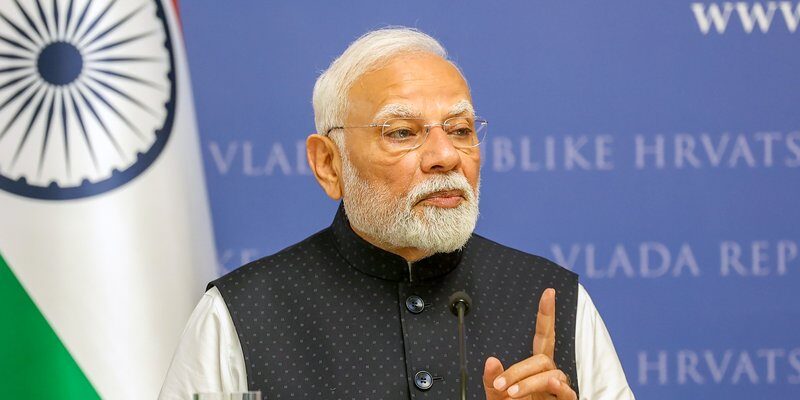
Indian Prime Minister Narendra Modi is set to visit Namibia this week, marking the final African stop on his five-nation tour.
The visit reflects India’s growing interest in strengthening ties with Africa’s leading uranium producer and a key player in the continent’s critical minerals economy.
Modi’s trip to Namibia follows a stop in Ghana and comes ahead of major engagements in Brazil for the BRICS Summit—underscoring New Delhi’s intent to deepen bilateral partnerships in Africa while advancing its multilateral global agenda.
In Ghana, Modi secured a major agreement on rare earth mineral mining, a strategic move aligned with India’s pursuit of critical resources such as uranium, lithium, and cobalt.
These minerals are essential to India’s ambitions in electric vehicles (EVs), clean energy, and technology manufacturing, particularly as it seeks to reduce dependence on China.
Bilateral trade between India and Namibia reached approximately $814 million in 2023–24, with Indian exports making up more than half of that figure. Indian investment in Namibia is estimated at $800 million, largely concentrated in the mining sector, including zinc and diamonds.
During his stay in Windhoek, Prime Minister Modi will hold bilateral talks with President Netumbo Nandi-Ndaitwah and is expected to address a joint sitting of Namibia’s Parliament.
A key highlight of the visit, according to Indian state media outlet DD News, will be the signing of a technology cooperation agreement aimed at enabling interoperable digital payment systems between the two nations.
Backed by India’s Ministry of External Affairs, the agreement is expected to deepen cooperation in the fintech and broader digital economy sectors.
With limited domestic reserves of critical minerals, India is actively working to secure reliable global supplies.
This strategy aims to bolster its clean energy transition, reduce import dependency, and strengthen strategic autonomy.
Namibia, the largest uranium producer in Africa and the third-largest globally, has become an increasingly attractive partner for countries seeking to diversify supply chains away from dominant players like China.
In addition to uranium, Namibia possesses vast reserves of lithium and rare earth elements—minerals vital to India’s EV and battery storage industries, as well as its expanding civilian nuclear power sector.
Modi’s visit is expected to include discussions on expanded cooperation in mining, technology transfer, and trade facilitation. Long-term uranium supply agreements are also likely to be on the agenda.
India is also eyeing greater engagement in Namibia’s diamond sector. Namibia is home to the richest marine diamond deposits in the world, estimated at over 80 million carats.
Currently, these rough diamonds are routed through global trade hubs such as London and Antwerp before reaching Indian markets.
Modi’s visit could pave the way for direct diamond trade between the two countries—an outcome that would significantly benefit India’s massive diamond cutting and polishing industry.
India’s outreach to Namibia comes amid intensified global competition for influence across resource-rich African nations.
For Namibia, the visit presents a valuable opportunity to deepen ties with Asia’s third-largest economy, attract new investment, and elevate its role in global mineral diplomacy.
As India positions itself as a key player in the global clean energy and tech supply chain, its strategic engagement with Namibia signals a new chapter in India-Africa relations—built on mutual benefit, resource cooperation, and shared development goals.
About the Author