EU Funds €2m Technical Support for Andrada Mining’s Uis Lithium Expansion in Namibia
The European Union has extended strategic support to Namibia’s lithium sector through a technical assistance programme targeting the Uis Lithium Expansion Project operated by Andrada Mining.
The support, administered by the European Investment Bank (EIB), is designed to advance the project to bankable feasibility stage.
The intervention positions the Uis Mine within Europe’s emerging critical raw materials supply chain without the EU taking equity or providing direct project financing.
Technical Assistance Without Equity or Debt
The funding is delivered through the EU-OACPS Technical Assistance Facility on Critical Raw Materials, an EU-backed mechanism aimed at helping African, Caribbean and Pacific states convert mineral resources into bankable, ESG-compliant projects aligned with Europe’s industrial and energy transition objectives.
Rather than issuing loans or acquiring ownership stakes, the facility finances high-level technical work, including:
-Feasibility studies
-Metallurgical optimisation
-Infrastructure design
-Regulatory and compliance support
By embedding European technical, environmental and governance standards at the project design stage, the EU reduces future supply risk while limiting financial exposure.
Under the cooperation agreement, Andrada’s wholly owned subsidiary, Uis Tin Mining Company, will receive consulting services valued at up to €2 million.
The assistance is grant-funded, with no repayment obligation, no equity dilution and no future funding commitments.
The EIB will administer the programme by appointing and managing specialist consultants, while the operating company will guide implementation and review technical outputs.
Resource Base and Expansion Strategy
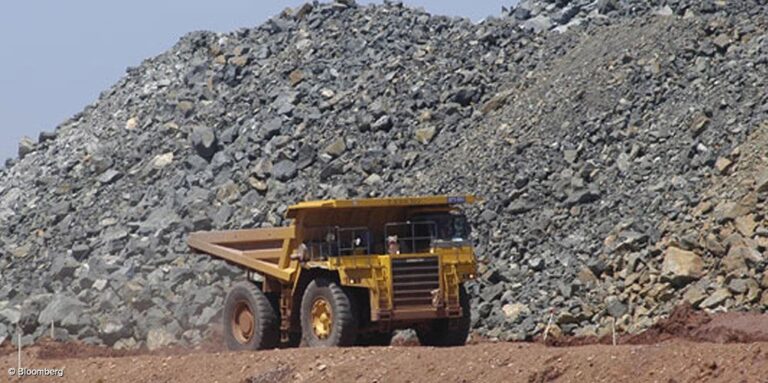
The Uis mining licence covers approximately 19,700 hectares and hosts numerous pegmatites containing lithium, tin, tantalum and rubidium mineralisation. Lithium occurs predominantly as petalite.
To date, Andrada has identified about 180 pegmatites across roughly five per cent of the licence area. A Mineral Resource Estimate for the V1 and V2 pegmatites, released in February 2023, stands at:
-81 million tonnes grading 0.73% lithium oxide
-0.15% tin
-86 parts per million tantalum
This equates to approximately 1.45 million tonnes of lithium carbonate equivalent, 120,000 tonnes of tin and 6,960 tonnes of tantalum.
The company’s medium-term objective is to expand the resource base to 200 million tonnes, leveraging the scalability of the existing tin and tantalum operation and integrating a dedicated lithium production circuit.
Integrated Lithium Development
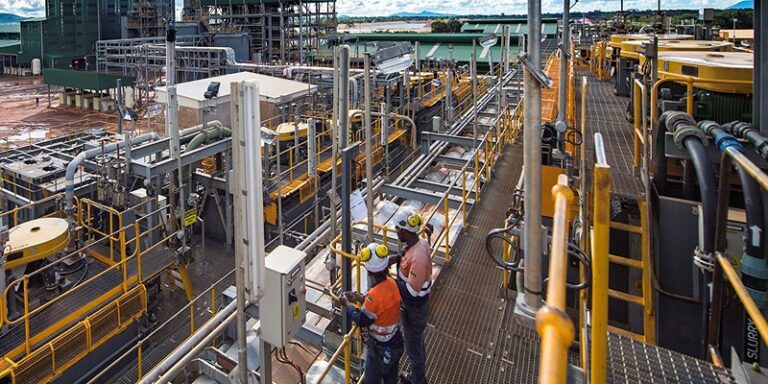
Andrada plans to monetise lithium contained in run-of-mine material by installing a beneficiation circuit integrated into the existing processing facility at the Uis Mine.
Importantly, the additional circuit will not require increased mining volumes. Instead, it will reprocess material currently treated as waste from the tin and tantalum concentrator to recover lithium through enrichment.
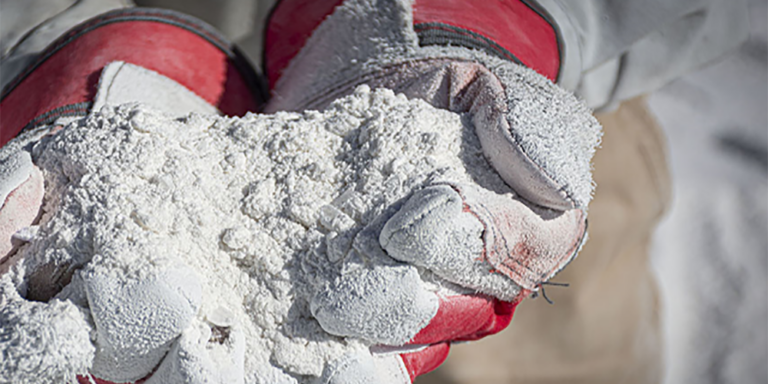
During the initial phase, the company intends to produce petalite concentrate for the technical lithium market, targeting annual output of 50,000 tonnes. Previous studies have advanced this phase to pre-feasibility level.
A second development phase is envisaged to supply concentrate suitable for lithium chemical conversion, serving the fast-growing battery materials market.
Strategic Alignment with EU Policy
From the European perspective, the agreement aligns with efforts to diversify supply under the EU’s Critical Raw Materials Act, which classifies lithium as both a critical and strategic raw material.
Andrea Clerici, Director for Corporates and Global Activities at the EIB, said the initiative supports the development of investor-ready projects that uphold high environmental and social standards while delivering mutual benefits for African producers and European industrial partners.
The technical assistance focuses on closing outstanding feasibility gaps, particularly around metallurgical optimisation and supporting infrastructure studies key requirements for securing project finance and long-term offtake agreements.
Feasibility-Stage Intervention Strategy
The Uis agreement reflects a deliberate EU strategy of intervening at the feasibility stage rather than financing mine construction. By shaping projects at source, the EU reduces downstream supply risk while supporting host-country value creation.
For Namibia, the programme delivers advanced technical work at no direct cost to the project, enhances Uis’s credibility as a globally significant lithium asset and strengthens the country’s position within clean-energy supply chains.
With institutional backing now in place, the Uis Lithium Expansion Project moves closer to bankability underscoring how technical assistance has become a strategic instrument in the geopolitics of critical minerals.
About the Author