Chile Pushes to Finalize Codelco-SQM Lithium Partnership as Key to Boric’s Mining Strategy
SANTIAGO – Chile’s newly appointed Economy Minister Álvaro García said he expects state-run copper giant Codelco and local miner SQM to finalize their long-awaited lithium partnership before the end of President Gabriel Boric’s administration in 2026.
Some presidential contenders have warned they would review or cancel the deal if it is not completed before Boric leaves office, increasing pressure on the government to deliver on its pledge to expand the state’s role in lithium production.
“This is our immediate objective. We expect it will be completed before the end of the administration,” García said in an interview.
He was appointed last week during a cabinet reshuffle that moved former economy minister Nicolás Grau into the role of finance minister.
Codelco and Santiago-based SQM initially planned to launch the joint venture in early 2025, but the process has taken longer than anticipated.
The agreement requires clearance from multiple antitrust regulators, with SQM expecting Chinese approval by September or October.
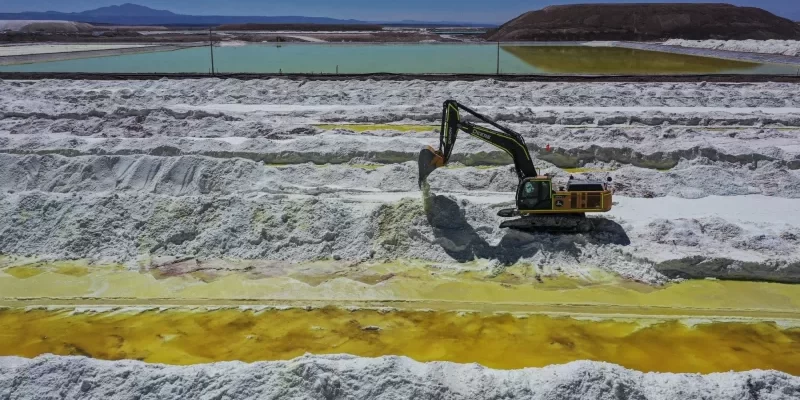
The deal would give Codelco, the world’s largest copper producer, majority control of SQM’s lithium production in the Atacama salt flat, one of the richest lithium reserves globally.
García also said he expects new lithium operating contracts to be issued in September, including one for Rio Tinto’s partnership with state-owned Enami.
Meanwhile, Chinese companies BYD and Tsingshan, which previously scrapped plans to build lithium processing plants in Chile, remain interested in future projects, García noted, though he did not provide further details.
Beyond lithium, García highlighted the importance of streamlining Chile’s permitting process to attract investment.
A new law to simplify development permits is expected to take effect in the coming days, pending final court review of challenges raised by legislators.
“Our information tells us the court has already agreed. The most important step now is defining how the regulations will be implemented,” García said.
A second bill aimed at accelerating the environmental assessment system—considered the longest and most complex stage of Chile’s permitting process—remains stalled in Congress.
García did not provide a new timeline but stressed that the first law alone will already expedite projects significantly.
“The process will be even more streamlined, but what has already been achieved with sector permits greatly speeds up investment,” he added.
About the Author